
XPeng has carved its humanoid-robot business out of the car company and into a standalone robotics funding entity that just raised more than $900 million at a post-money valuation above $6.3 billion. It is the largest single-round private financing ever recorded in China’s embodied-AI industry, and it puts Tencent and Alibaba on the cap table as strategic backers alongside IDG Capital.
The carmaker-robot wave
XPeng is not alone in turning a robot unit into a financing vehicle. Chery’s AiMOGA (MoJia) unit has begun IPO preparations after shipping more than 3,000 robots, and Unitree — whose “Superhuman” humanoid stole the show at the World Robot Conference — listed on the STAR Market this month. Nearly 20 Chinese carmakers are now developing humanoids, betting that the supply chain they already run for EVs — motors, batteries, precision electromechanics — is the missing piece most robot startups lack. BYD, too, has pushed its own humanoid and battery bets.
The funding deal, in numbers
XPeng announced the arrangement in a Hong Kong Stock Exchange filing on Monday. The robotics unit — operated under Dogotix, the company XPeng chairman and CEO Xiaopeng He acquired in 2020 — will take in about $900 million in subscription commitments.
The structure splits three ways:
- $600 million from external investors — led by IDG Capital, with Gaorong Ventures participating and Tencent and Alibaba in as strategic investors.
- $200 million from an XPeng subsidiary.
- $100 million from entities controlled by He and co-president Brian Gu, who also received warrants to invest up to $500 million more.
Pre-money valuation is $5 billion. If the equity incentive plan is fully used, the implied post-transaction value is about $6.3 billion. XPeng keeps control: roughly 81.97% excluding additional investment, diluting to about 68.41% if all warrants are exercised and the incentive pool is maxed out. Either way, Dogotix stays a controlled subsidiary and its results remain consolidated into XPeng’s financial statements.
There is a catch for the investors. If Dogotix fails to complete a qualified IPO within seven years of the first subscription, they can force a repurchase at the higher of cost plus 8% compounded annual interest or 120% of cost. Unaudited management accounts showed Dogotix had net liabilities of about 447 million yuan ($65.9 million) as of March 31.
Why carve it out
XPeng said the spin-out lets the market price the robotics business on its own and brings in specialized capital, while taking the cash burn of robot R&D off the group’s balance sheet. The carve-out transfers assets, IP, staff and systems tied to robotics to Dogotix, a process expected to wrap within 18 months of the first external close.
Dogotix’s mandate covers general-purpose robots — humanoid, biped, quadruped and tracked. XPeng’s car, flying-car, robotaxi and chip businesses are explicitly excluded.
The robot: IRON
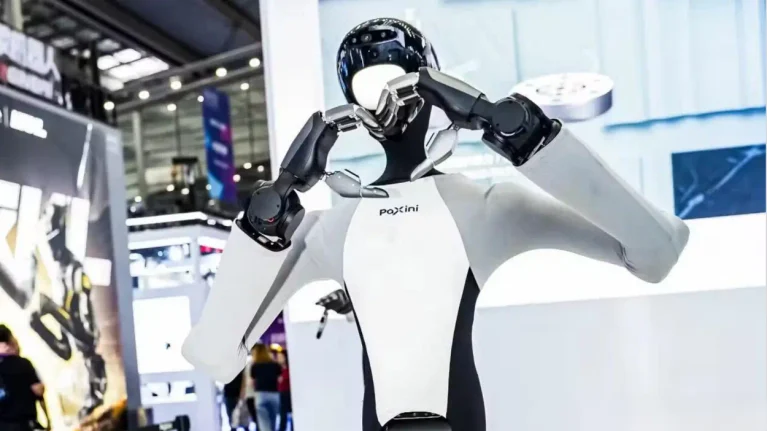
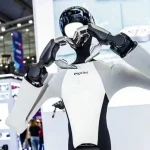
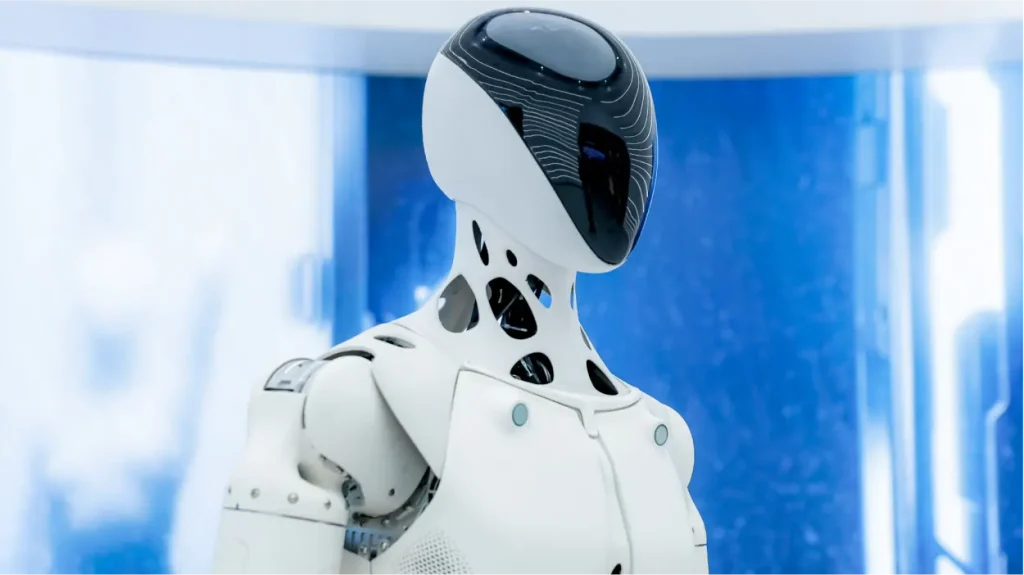
The asset behind the valuation is IRON, XPeng’s next-generation humanoid. It carries 76 degrees of freedom across the body and 21 in each hand, wrapped in a fully enclosed flexible lattice shell. Three in-house Turing AI chips deliver up to 2,250 TOPS of effective compute, enough to run XPeng’s Physical AI foundation model on-device — meaning IRON is designed to work without a remote operator.
XPeng first showed IRON in November 2025. The robot was so lifelike that the market questioned whether it was real; He responded by cutting one open to prove it. A full-chain mass-production base broke ground in February 2026, and small-batch trial production began at XPeng’s Guangzhou factory in July.
XPeng expects IRON to enter mass production by the end of 2026, starting in its own stores and campuses, before launching and delivering in China and overseas markets in 2027.
XPeng’s robot funding: frequently asked questions
How much did XPeng’s robotics unit raise?
More than $900 million, at a post-money valuation above $6.3 billion — the largest single-round private financing on record in China’s embodied-AI industry.
What is Dogotix?
The robotics entity XPeng chairman and CEO Xiaopeng He acquired in 2020. It now operates XPeng’s humanoid-robot business, including the IRON humanoid, as a carved-out, controlled subsidiary.
Who invested in the round?
IDG Capital led the external investors, with Gaorong Ventures participating and Tencent and Alibaba as strategic backers. A XPeng subsidiary put in $200 million and He and co-president Brian Gu added $100 million, with warrants for up to $500 million more.
What is the IRON robot?
XPeng’s next-generation humanoid with 76 degrees of freedom across the body and 21 per hand, powered by three in-house Turing AI chips (up to 2,250 TOPS). Mass production is targeted for end-2026, with overseas delivery in 2027.
Why did XPeng carve the robotics unit out of the car group?
To let the market price the robotics business separately, bring in specialized capital, and move robot R&D cash burn off the group’s balance sheet. The car, flying-car, robotaxi and chip businesses stay with XPeng.
The Bottom Line
XPeng carved its robotics unit Dogotix out of the car group in a $900 million round at a $6.3 billion valuation — China’s largest embodied-AI private raise — with IDG leading and Tencent and Alibaba as strategic backers. IRON is targeted for end-2026 mass production, with overseas delivery in 2027.
Sources & Further Reading
- CnEVPost — XPeng carves out robotics business at $6.3 billion post-money valuation
- Sina Finance — Pengxing first round >$900M, Tencent and Alibaba invest
- Related: Chery robot unit begins IPO preparations
- Related: Unitree’s “Superhuman” humanoid and its IPO-timed reveal
- Related: Nearly 20 carmakers are building humanoid robots
- Related: BYD’s humanoid robot and battery bets