

The Big Picture
- The old bet, won: BYD invested in CXMT at a RMB 19.8B valuation in 2020. CXMT listed on July 27 at RMB 3.27T — a 165x return. NIO, Chery, GAC, and Xiaomi also bought in through various channels.
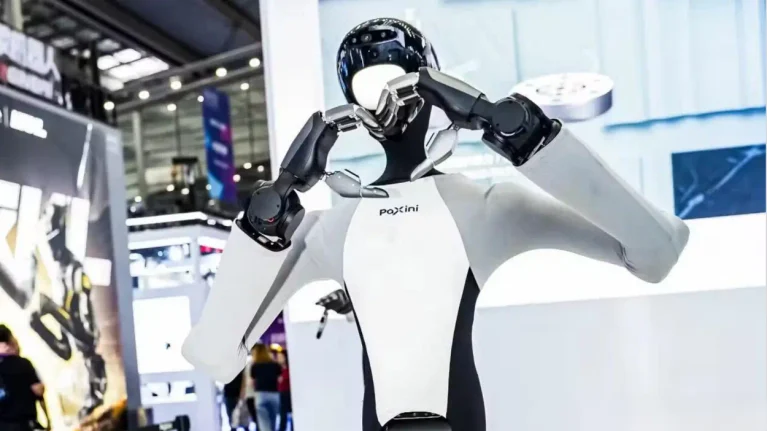
- The new bet, placed: On July 28, BYD confirmed its humanoid robot — codenamed Xiao Di, 31 degrees of freedom, multilingual — will debut in August. Plan: 2-3 robots per dealership for customer reception and product demos.
- The pattern: BYD isn’t just making cars. It’s stacking bets on the supply chain behind them — chips, robots, the whole stack.
The Bet That Already Paid Off
On July 27, a Chinese company most people outside the semiconductor industry had never heard of listed on Shanghai’s STAR Market. ChangXin Memory Technologies — CXMT, China’s largest DRAM manufacturer — closed its first trading day at RMB 3.27 trillion (~$450 billion), a 465.82% gain from its IPO price, making it the most valuable company on China’s A-share market.
The numbers behind the listing are staggering: 6.69 billion shares at RMB 8.66 each, raising RMB 57.9 billion ($8.1B) before the greenshoe. Founded in 2016 by Zhu Yiming — a physicist and electrical engineer who spent years in Silicon Valley before returning to China — CXMT went from acquiring patents from bankrupt German DRAM maker Qimonda to capturing 8% of the global DRAM market in Q1 2026, according to the Shanghai Stock Exchange. It now ranks fourth globally behind Samsung, SK Hynix, and Micron.
What does any of this have to do with electric vehicles? Everything, as it turns out.
On July 28 — one day after the IPO — BYD’s Board Secretary Li Qian posted on his WeChat Moments:
BYD Board Secretary Li Qian, July 28, 2026
“Six years ago, BYD participated in CXMT’s first funding round at a pre-money valuation of RMB 19.8 billion. Honestly, when we invested, we didn’t have the imagination to foresee CXMT achieving such remarkable results at this speed — in 6 years, growing into China’s #1 and the world’s #4 DRAM manufacturer. The rise of Chinese technology has been this rapid. This is the gift of the era, and the reward of patient capital value investing.”
The math is absurd. A RMB 19.8 billion valuation became RMB 3.27 trillion — a 165-fold return in six years. BYD’s investment was made through a private equity fund, not directly on its balance sheet, so the exact return isn’t public. But even a small stake at that entry price is now worth billions. Wang Chuanfu personally holds 0.014% of CXMT as a beneficiary shareholder.
NIO, Chery, GAC, and Xiaomi Were in the Room Too
The CXMT story isn’t just about BYD. It’s about an entire generation of Chinese automakers quietly locking in their chip supply chains — and getting paid handsomely for it.
| Automaker | Investment | Channel | Purpose |
|---|---|---|---|
| BYD | 2020 Series A | Private equity fund | Strategic investment |
| NIO | ~RMB 158M ($21.8M) | Pre-IPO strategic placement | LPDDR4X/5X for vehicles |
| Chery | ~RMB 158M ($21.8M) | Pre-IPO strategic placement | Supply chain partnership |
| GAC | 2021 round | GAC Capital | “Key chip industry deployment” |
| Xiaomi | Strategic placement | Xiaomi Corp | Smartphone + EV DRAM |
NIO and Chery each secured ~18.24 million shares with an 18-month lockup. NIO confirmed the partnership covers “LPDDR4X and LPDDR5X automotive-grade DRAM products” — the kind of chips that power everything from infotainment systems to autonomous driving modules.
Strategic investors in the CXMT IPO also included Alibaba Cloud, ZTE, Transsion, TCL, and Huaqin Technology, per China Daily. The message is clear: China’s entire consumer electronics and automotive ecosystem is betting that domestic DRAM is no longer a “maybe” but a “must-have.”
The Bet That’s About to Start: Humanoid Robots in Dealerships
While Li Qian was posting about a six-year-old win, BYD’s official channels were confirming a bet that’s brand new.
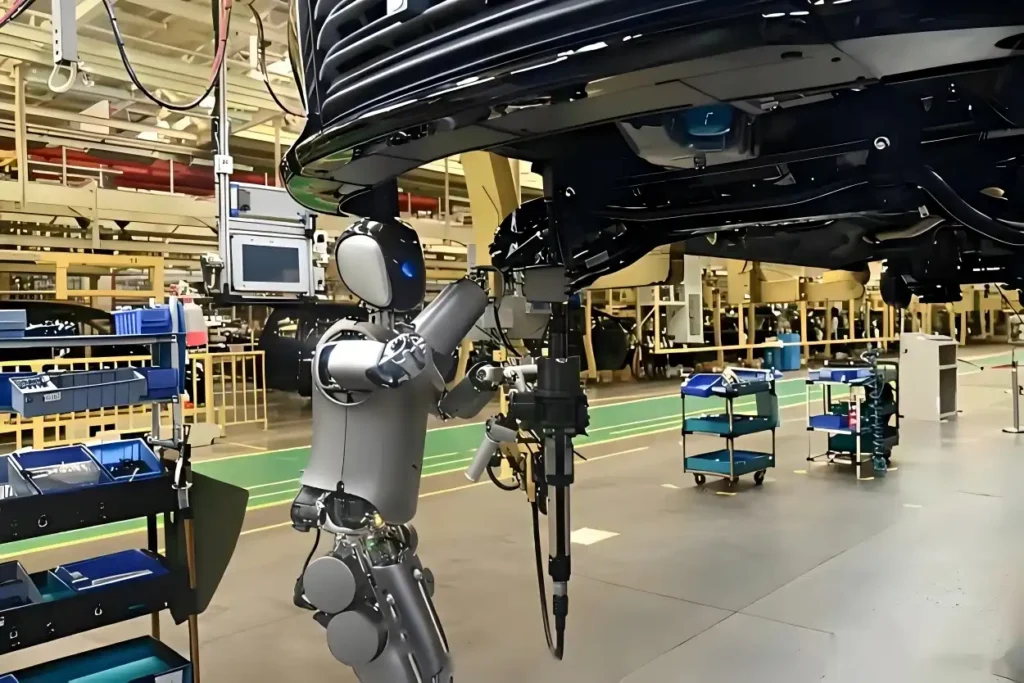
On July 28, BYD officially confirmed to Chinese media that its humanoid robot will debut in August at the “Di Space” brand experience center in Zhengzhou. The robot — codenamed Xiao Di — has 31 degrees of freedom, 360-degree vision modules, dynamic real-time modeling, and multilingual interaction covering six regional Chinese dialects plus international languages, according to TMTPOST.
The deployment plan is unusually specific for an emerging technology: 2 to 3 robots per dealership, starting with the Di Space experience centers and rolling out across BYD’s network. Their job: greet customers, explain vehicle specs, demonstrate features, and “create a more engaging showroom atmosphere,” as EVP Li Ke described it in an earlier interview.
“These robots won’t just stand there,” Li Ke said. “They’ll interact — explain trims, show off the infotainment system, answer questions in multiple languages. Every dealership becomes a tech showcase.”
The commercial logic is straightforward: BYD has over 30,000 dealerships globally. That’s 60,000 to 90,000 robots at full deployment — an instant fleet that would make BYD the world’s largest operator of humanoid robots overnight. More importantly, it gives the company a real-world data flywheel for embodied AI that no lab can replicate.
BYD started its embodied AI research team in 2022, well before most of the industry took humanoid robots seriously. The timing aligns with a broader policy push: in June 2026, MIIT and SASAC jointly launched a national action plan targeting 10,000-unit-scale deployment of humanoid robots by year-end 2026.
Why Both Stories Belong Together
CXMT and Xiao Di look like two unrelated headlines — a chipmaker IPO and a robot announcement — but they’re the same story told at different speeds.
The CXMT bet was made in 2020, when DRAM was a commodity most automakers bought from Samsung or SK Hynix without thinking twice. BYD saw something different: that as cars become “smartphones on wheels,” the chips inside them — the memory that powers ADAS, infotainment, over-the-air updates — would become as strategically important as the batteries. Six years later, that bet has paid off 165 times over, and CXMT’s chips are in more than 30% of Android smartphones sold in China, per Yicai Global.
The Xiao Di bet is the same logic, projected forward: that the robots that will work in factories, greet customers in showrooms, and eventually enter homes will be built on the same supply chain — motors, batteries, sensors, AI chips — that BYD already owns. The core insight isn’t “BYD is making a robot.” It’s “BYD has been building the supply chain for this robot for 20 years and didn’t know it.”
Author’s Take
The CXMT return is eye-popping, but the more interesting question is what it says about how BYD thinks about risk. Most automakers invest in things that make their cars better — new battery chemistry, better motors, smarter software. That’s a one-dimensional bet: if the car succeeds, the investment succeeds. BYD’s CXMT play is different. It’s a bet on the supply chain around the car — the chips, the memory, the computing infrastructure that every EV will need regardless of which brand wins. If BYD sells fewer cars but CXMT chips go into every smartphone and server in China, BYD still wins. That’s portfolio thinking, not product thinking.
The robot bet extends the same logic into the physical world. If the robots work, BYD has a new business. If they don’t, BYD learned something about embodied AI that nobody else learned at 30,000-dealership scale. Either way, it’s the kind of asymmetric bet that companies built on quarterly earnings don’t make — and the kind that, when they hit, look obvious in hindsight.
The Bottom Line
BYD’s CXMT bet turned RMB 19.8 billion into RMB 3.27 trillion in six years. Its humanoid robot bet — 2 to 3 machines per dealership, starting next month — might be worth nothing, or it might be worth everything. The underlying strategy is the same: own the supply chain, not just the end product.
While the rest of the auto industry fights over market share in a shrinking Chinese passenger car market, BYD is stacking bets on chips and robots that will matter regardless of who wins the EV wars. That’s either the most disciplined long-term thinking in the industry, or the most expensive insurance policy ever written. The CXMT return suggests it’s the former.
Sources & Further Reading
- Shanghai Stock Exchange / China Daily — “Chinese Chipmaker Sets Shanghai IPO Price” (July 16, 2026)
- TMTPOST — “BYD to Debut Humanoid AI Robot at Brand Experience Center in August” (July 28, 2026)
- Sina Finance / Star Island — “BYD Confirms Humanoid Robot, Li Qian WeChat Post on CXMT” (July 28, 2026)
- National Business Daily — “NIO, Chery Invest in CXMT Strategic Placement” (July 28, 2026)
- China Daily — “CXMT IPO Strategic Investors: Xiaomi, Alibaba, NIO, Chery” (July 15, 2026)
- Yicai Global — “CXMT’s $4.3B IPO, Market Share Data” (July 10, 2026)
- Wall Street CN — “BYD Robot August Debut, XPeng IRON, Li Auto Dual-Track” (July 28, 2026)