


Here is the paradox: a single BYD megawatt flash-charging nozzle can push 1,500 kW to a car, yet the station behind it often runs on a transformer no larger than the one feeding a mid-sized factory. The trick is not magic; it is a battery hiding inside the station. BYD calls the approach “small transformer + big storage,” Coupled with the benefits of BYD’s second-generation Blade Battery, and it is the reason the company’s new charging network can plug into ordinary grid infrastructure while delivering supercharger output that makes Tesla V4 look like a wall socket.
01 · How Megawatt Charging Works
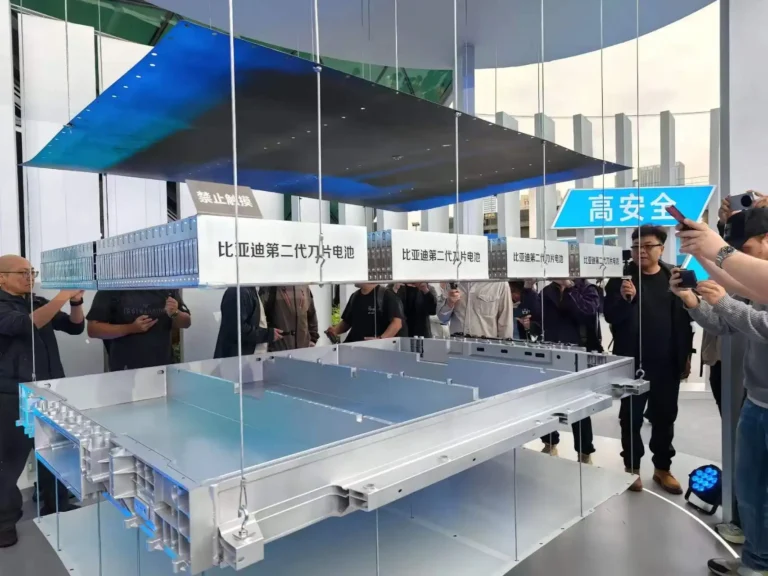
The core idea of BYD’s megawatt flash charging is straightforward: the grid plus an on-site battery work together. Power flows through a two-stage conversion — AC/DC rectification followed by DC/DC conversion — so the station can deliver megawatt-class bursts to vehicles without pulling megawatt-class peaks from the grid.
I have drawn up a schematic diagram, as shown in Figure 1 below.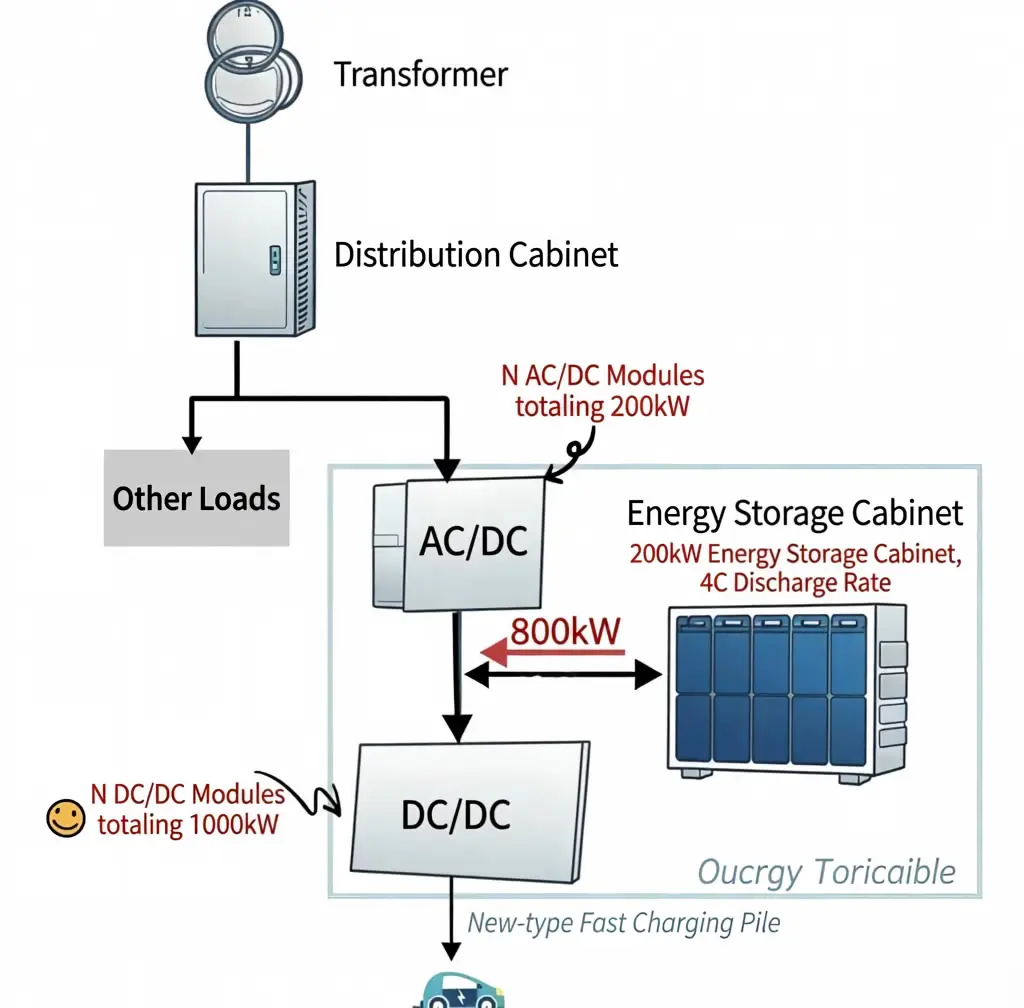
The “Small Transformer + Big Storage” Recipe
BYD’s innovation is to pair a relatively modest grid transformer with a large lithium-iron-phosphate (LFP) storage cabinet. A typical BYD flash-charging site needs only a 300–400 kVA transformer. The minimum acceptable grid connection is just 160 kVA, a threshold small enough to qualify for China’s “Three Zero Service” policy for low-voltage business connections. The maximum transformer size BYD deploys is 630 kVA — still modest compared with the station’s peak output.
By charging the on-site storage cabinet slowly from the grid and discharging it rapidly into the vehicle, the station effectively decouples peak nozzle power from peak grid demand.
Three Zero Service context: China’s “Three Zero” policy for small businesses generally means zero application fees, zero approval paperwork, and zero investment in grid-extension assets for eligible low-capacity connections. BYD’s ability to use a 160 kVA transformer makes the station far easier and cheaper to permit than a traditional 1.5 MW grid feed.
02 · Why Flash Charging Needs a Storage Cabinet
Without the storage cabinet, the station would need a transformer and grid connection sized for the full 1,500 kW peak. In many locations, that kind of utility upgrade is either prohibitively expensive or physically impossible.
Grid transformer sized for peak nozzle power; utility upgrade and demand charges make deployment slow and expensive.
Small transformer sized for average load; storage covers short peaks. Faster permitting, lower grid fees, more sites.
The storage cabinet also solves two operational problems at once:
- It reuses existing infrastructure. The station can tap into an existing transformer and distribution lines rather than waiting for a dedicated high-capacity feeder.
- It shaves the peak. Flash charging pulls massive current for only a few minutes. The battery absorbs the spike and is then replenished gradually from the grid during idle periods.
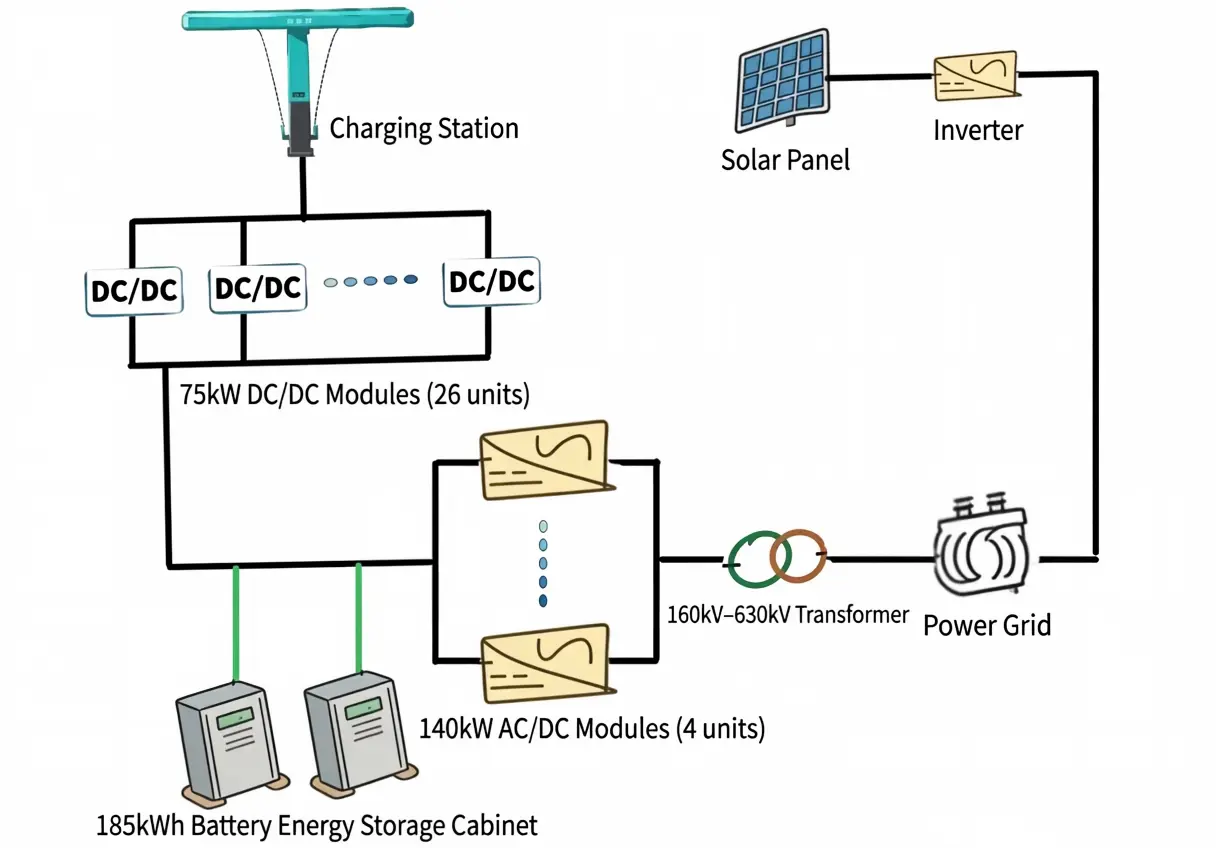
03 · What Happens When the Storage Battery Runs Low?
A dual-nozzle BYD flash-charging site usually installs two 185 kWh storage cabinets for a combined 370 kWh of on-site buffer. BYD also imposes a hard floor: any partner-built station must maintain a minimum output of at least 300 kW even when the storage is depleted.
Running the numbers gives a sense of how long the buffer lasts. Assume an average EV battery of 70 kWh and a typical flash-charge session that fills roughly half the pack. During the peak, the station draws roughly 30% of the power from the grid and 70% from the storage cabinets. With 370 kWh of buffer, the site can theoretically support about 7 vehicles before the storage is exhausted — a cycle that takes roughly 70 minutes at high throughput. During that window, the grid continues to trickle-charge the cabinets at low power.
| Parameter | Value | What It Means |
|---|---|---|
| Storage per cabinet | 185 kWh | LFP battery, IP55 enclosure, 4 internal packs of 46.4 kWh each |
| Typical dual-nozzle site | 370 kWh | Two cabinets, enough for roughly 7 flash sessions before recharge |
| Grid / storage load split | ~30 / 70 | Grid supplies the base load; storage covers the megawatt peak |
| Minimum site output | 300 kW | Hard floor set by BYD for partner-built stations |
| Grid trickle recharge | Continuous | Storage is refilled between sessions at low grid power |
Fig. 3 · Storage sizing and load-split assumptions for a dual-nozzle BYD flash charging site. Sources: BYD partner documentation and teardown data.
Reality check: The “7 vehicles in 70 minutes” figure is a theoretical maximum. Real-world throughput depends on ambient temperature, starting state of charge, vehicle acceptance curves, and how aggressively drivers fill their packs. Hot summer days and warm batteries improve throughput; cold batteries slow both the vehicle and the storage recharge rate.
04 · Why the Cable Does Not Need to Be Thicker
A common misconception is that 1,500 A would require a cable as thick as a fire hose. BYD avoids that by moving to a 1,000 V architecture and by liquid-cooling the cable.
I have drawn up a schematic diagram, as shown in Figure 4 below.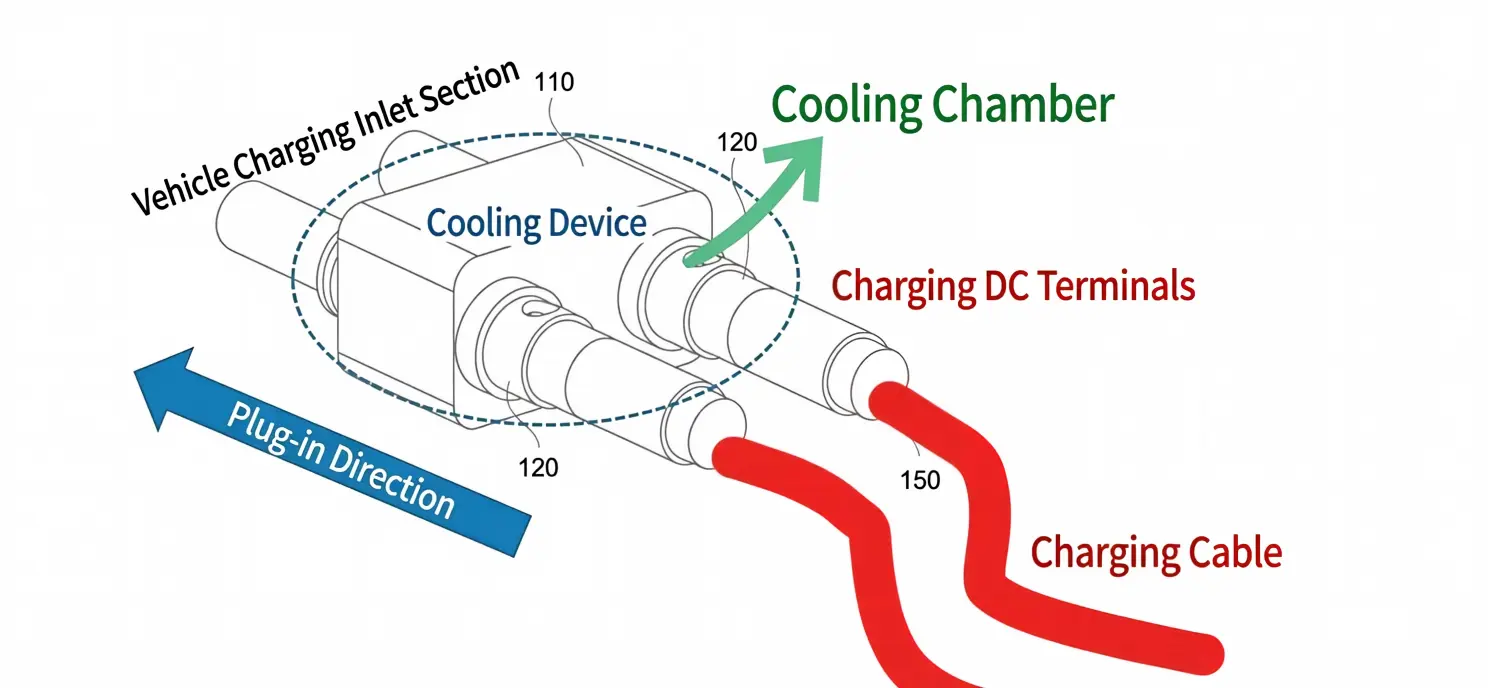
At 1,000 V, delivering 1,500 kW requires 1,500 A — still extreme, but manageable because the coolant carries away the resistive heat. The cable can therefore use conductors smaller than a passive air-cooled 500 A cable would need at 400 V. Active cooling replaces copper mass as the heat-management strategy.
This matters for ergonomics and site layout. A thinner, lighter cable is easier for drivers to handle and requires less structural support than a passive copper trunk thick enough to carry the same current.
05 · Inside the Station: Storage, Host, and Terminal
A BYD megawatt flash charging station breaks down into three physical subsystems: the storage battery cabinet, the charging host, and the charging terminal.
I visited the official BYD fast-charging station and took a panoramic photograph of the station, as shown in Figure 5 below.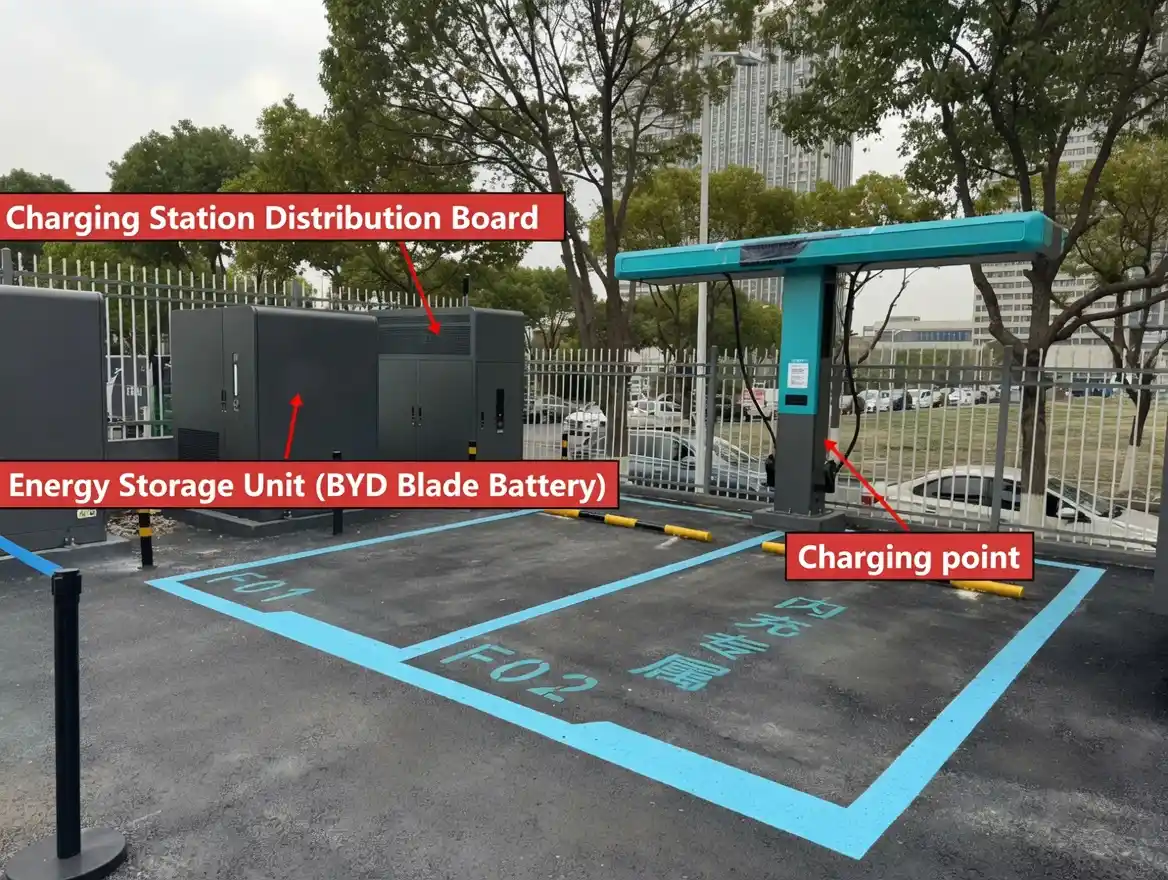
1) Storage Battery Cabinet
The storage cabinet uses BYD’s LFP cells. Each cabinet stores 185 kWh and is built from four battery packs of 46.4 kWh each. Inside the cabinet, BYD integrates the battery management system (BMS), energy management system (EMS), and power conversion system (PCS) into a single enclosure with an IP55 rating.
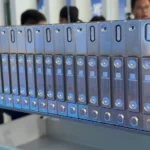
I visited the official BYD Flash Charging Station and took a photograph of Storage Battery Cabinet as shown in Figure 6 below.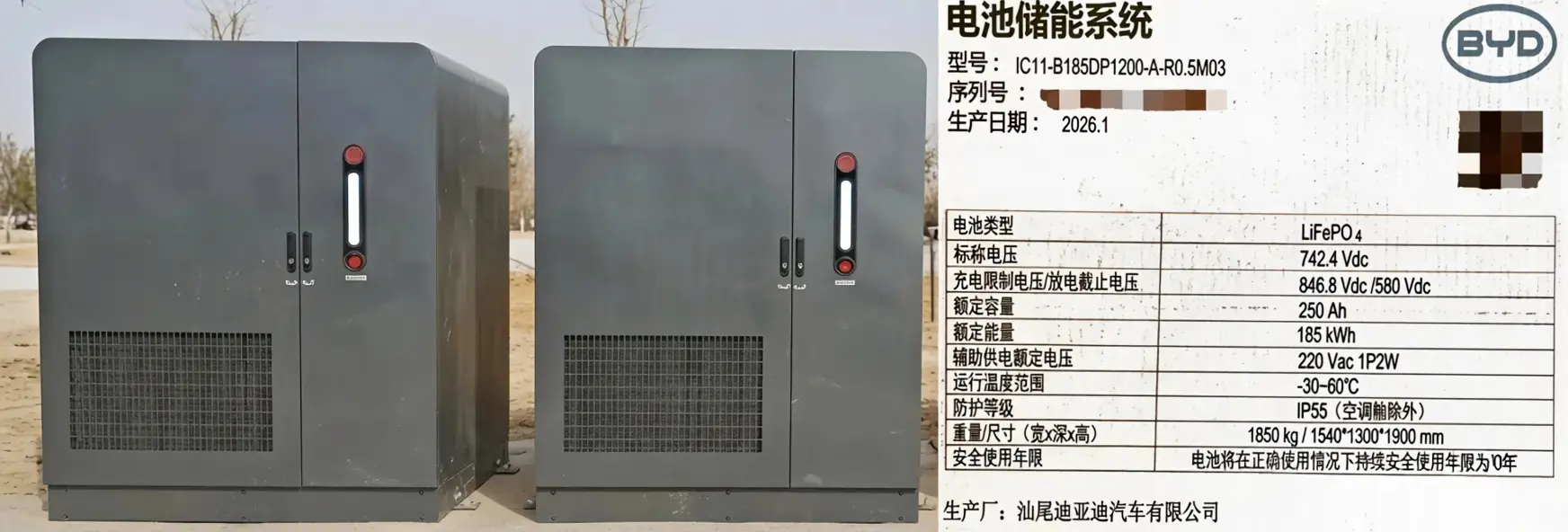
2) Charging Host
The charging host is the power-electronics heart of the station. A megawatt-class host typically contains 4 AC/DC modules at 140 kW each and 26 DC/DC modules at 75 kW each, all liquid-cooled. The combined maximum output of the host is 2,100 kW — enough headroom to run one nozzle at 1,500 kW while still supplying the second.
I visited the official BYD Flash Charging Station to take photographs of the charging unit and the BYD Blade Battery energy storage unit, as shown in Figure 7 Figure 8 below.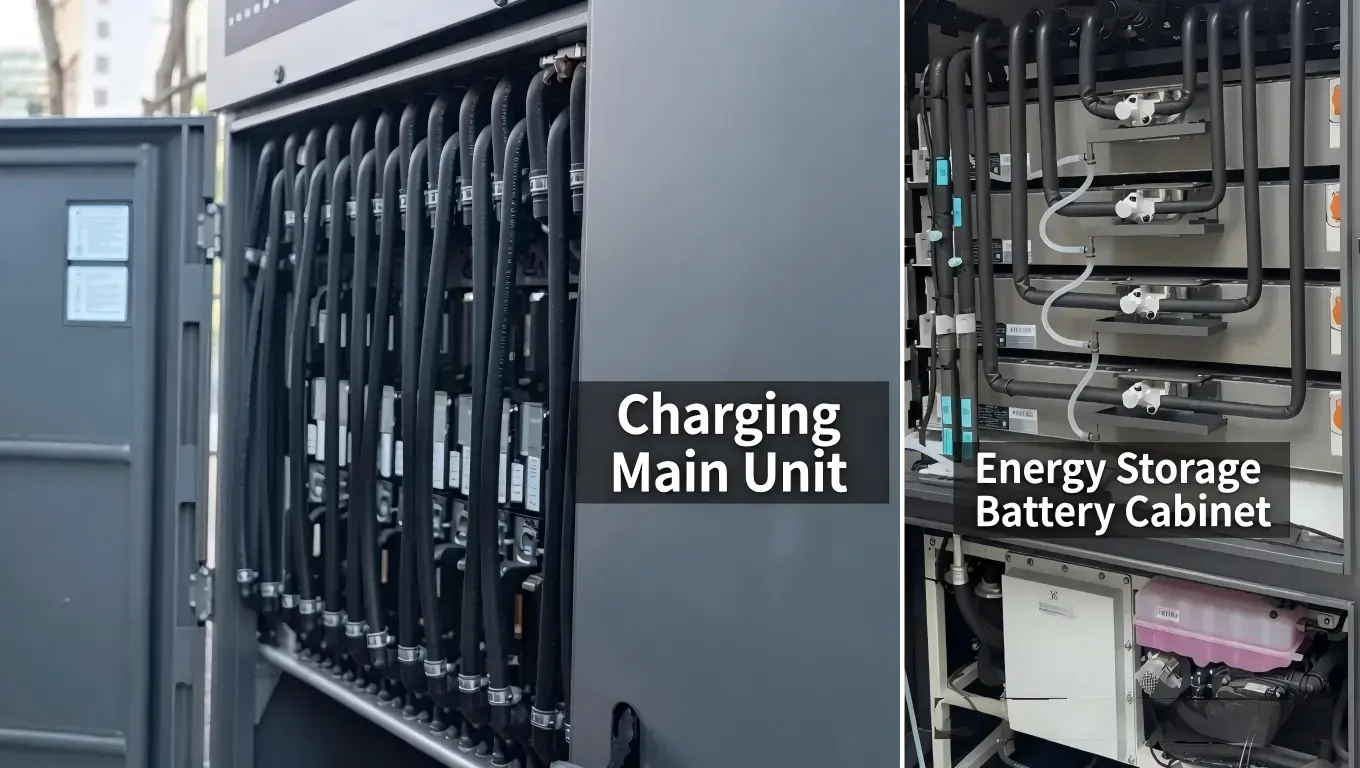
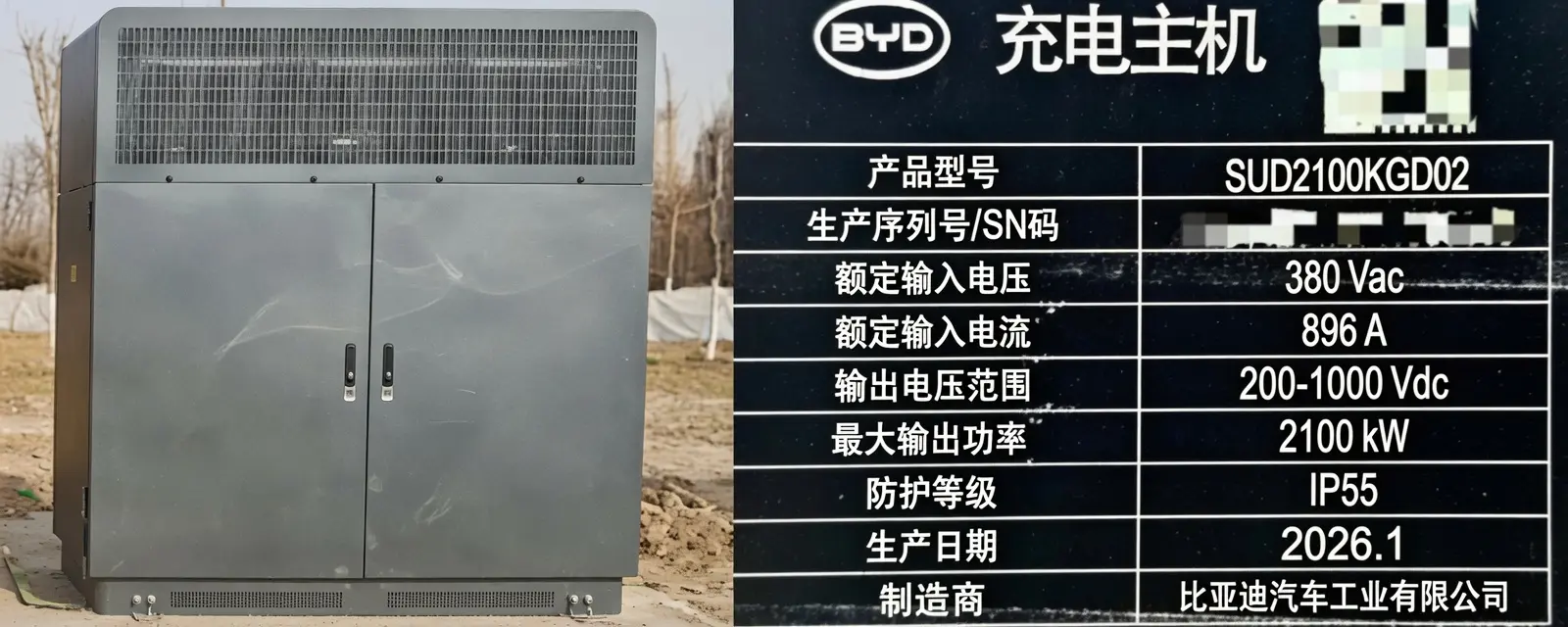
3) Charging Terminal
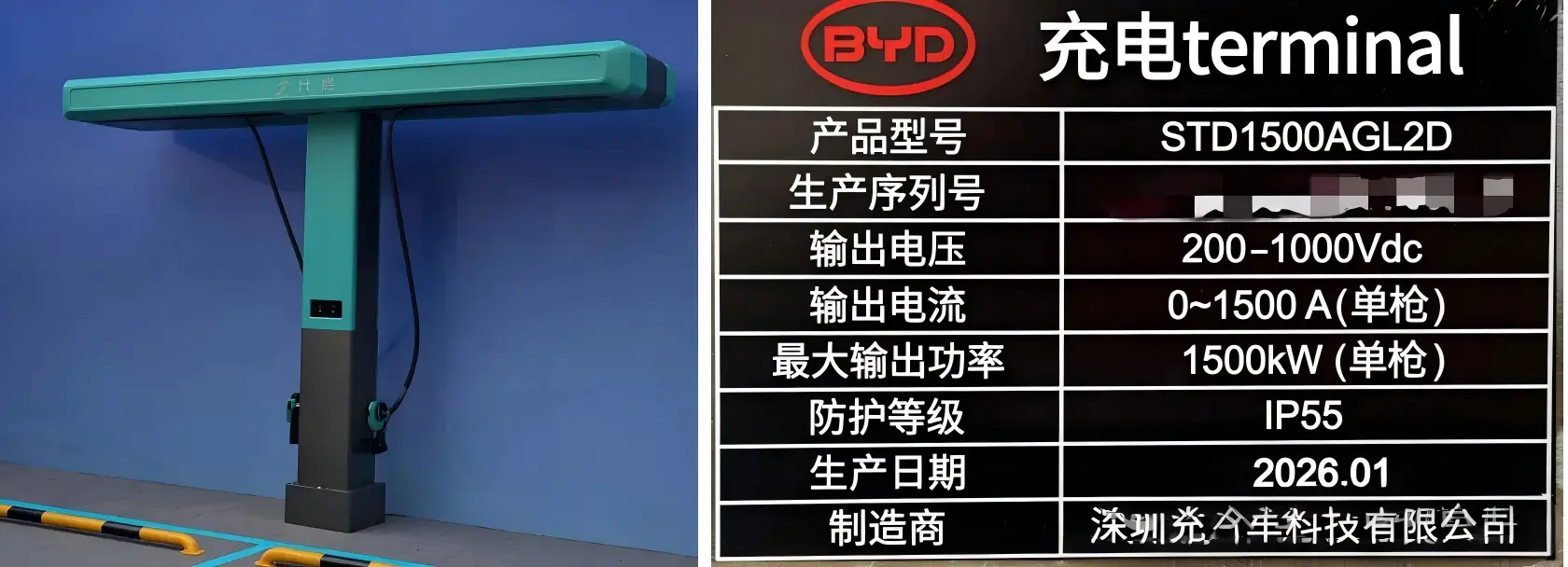
The terminal is the visible nozzle and dispenser. BYD’s terminal supports up to 1,500 kW per gun at 200–1,000 V and 0–1,500 A. Like the host and storage cabinet, it is IP55-rated.
Frequently Asked Questions
It cannot — not alone. The 160 kVA transformer supplies a continuous base load to the on-site LFP storage cabinets, which are charged slowly between sessions. When a vehicle plugs in, the storage battery delivers the megawatt-class burst while the grid connection contributes only about 30% of the peak. This “small transformer + big storage” architecture is what allows BYD to deploy megawatt charging without utility-scale grid upgrades.
A dual-nozzle site with two 185 kWh cabinets (370 kWh total) can theoretically support about 7 consecutive flash-charge sessions at roughly 50% pack fill per vehicle. In practice, the number varies with ambient temperature, vehicle battery size, and starting state of charge. The grid continues to trickle-charge the cabinets between sessions, so the buffer recovers over time.
BYD requires every partner-built station to maintain a minimum output of 300 kW even when the storage buffer is fully depleted. At that point, the station effectively becomes a conventional DC fast charger running directly off the grid transformer. Charging speed drops from the megawatt-class flash rate to a still-respectable 300 kW until the storage cabinets recharge.
Two reasons. First, BYD uses a 1,000 V architecture instead of the older 400 V standard — higher voltage means lower current for the same power, which means thinner conductors. Second, the cable is actively liquid-cooled: coolant circulates through the handle and cable to carry away resistive heat. Active cooling replaces raw copper mass as the thermal management strategy, keeping the cable thin enough for a driver to handle comfortably.
The storage cabinets use BYD’s own lithium iron phosphate (LFP) cells — the same Blade Battery chemistry used in BYD’s electric vehicles. LFP was chosen for its thermal stability, long cycle life, and lower cost compared with NMC chemistries. Each cabinet holds 185 kWh across four internal packs of 46.4 kWh each, with integrated BMS, EMS, and PCS in a single IP55-rated enclosure.
Tesla’s V4 Supercharger peaks at around 350 kW per stall and relies on direct grid connection without on-site storage. BYD’s flash charging delivers up to 1,500 kW per nozzle — over 4× the peak power — by adding the LFP storage buffer. The trade-off is that BYD’s approach requires more capital expenditure per site (storage cabinets are not cheap), but it bypasses the grid capacity bottleneck that has slowed high-power charging deployment in dense urban areas.
“Three Zero Service” (三零服务) is a Chinese grid-connection policy for eligible low-capacity business users. It generally means zero application fees, zero approval paperwork, and zero investment in grid-extension assets. Because BYD’s flash charging stations can operate on a 160 kVA connection — small enough to qualify — the policy dramatically reduces permitting time and cost compared with building a dedicated megawatt-class grid feed.
BYD’s megawatt flash charging station pairs a small grid transformer (160–630 kVA) with a large on-site LFP storage buffer (370 kWh for a dual-nozzle site) to deliver 1,500 kW per nozzle without requiring a megawatt-class grid connection. The architecture relies on three subsystems — storage cabinet, charging host (4 AC/DC + 26 DC/DC modules, 2,100 kW max), and liquid-cooled terminal (1,000 V, 1,500 A) — all IP55-rated. This “small transformer + big storage” approach allows rapid deployment under China’s low-voltage “Three Zero Service” policy, bypassing the utility upgrade bottleneck that has slowed competing high-power charging networks.



Hello, do you have a picture of the right side door of the DC BESS? It would be interesting to see how many PCS they have in.
Thanks
Chuck
Within the energy storage cabinet, the PCS is primarily responsible for bidirectional conversion between the battery and the DC bus; the specific number of modules depends on the site’s generation mix configuration. I’ve already sent the photos to your email address.
Hallo Sheng He.
Very interesting article overall, full of details and useful informations.
However I do not understand your calculation of 7 charge sessions in 70 minutes before the battery of the storage units is depleted.
1. How much kWh in total you have assumed to deliver to the 7 vehicles in 70 minutes?
2. Are 7 + 7 vehicles (7 for each connector) or 7 in total
3. How much of the storage battery capacity you have considered to deliver to the vehicles through the PCS, the total of 370kWh or less?
4. What is the grid capacity you have considered for your simulation
5. How much power is delivered to the 7 (or 7+7) vehicles from the grid during the charging sessions.
Thank you, Marco
Fair catch, Marco — you’re right. Corrected basis: 370 kWh nameplate (~340 kWh usable), 160 kW grid input, sessions 10%→97% SOC. Seven cars is the site-wide total, not per nozzle. ~505 kWh delivered: ~168 kWh from the grid (~24 kWh per car) and ~337 kWh from storage, so the buffer ends up essentially empty. The “30/70” split I quoted applies to a 560 kW grid input, not the 160 kW minimum (~11%). Thanks for the check.